Overhead Power Relocation – Central Arnhem Road
Services
Utilities & Energy Infrastructure / Electrical & Lightening / Project Management
Industries
Government & Infrastructure / Remote & Regional Development

Project Manager
Sam Molloy
Client
Department of Infrastructure, Planning and Logistics (DIPL) with Power and Water Corporation (PWC)
Location
Katherine, NT
Scope
Design and installation of four 30m lighting towers with floodlights, distribution board, and underground reticulation
Timeline
Planning and procurement mid 2022; staged mobilizations and HV shutdowns Nov–Dec 2022.
Scope
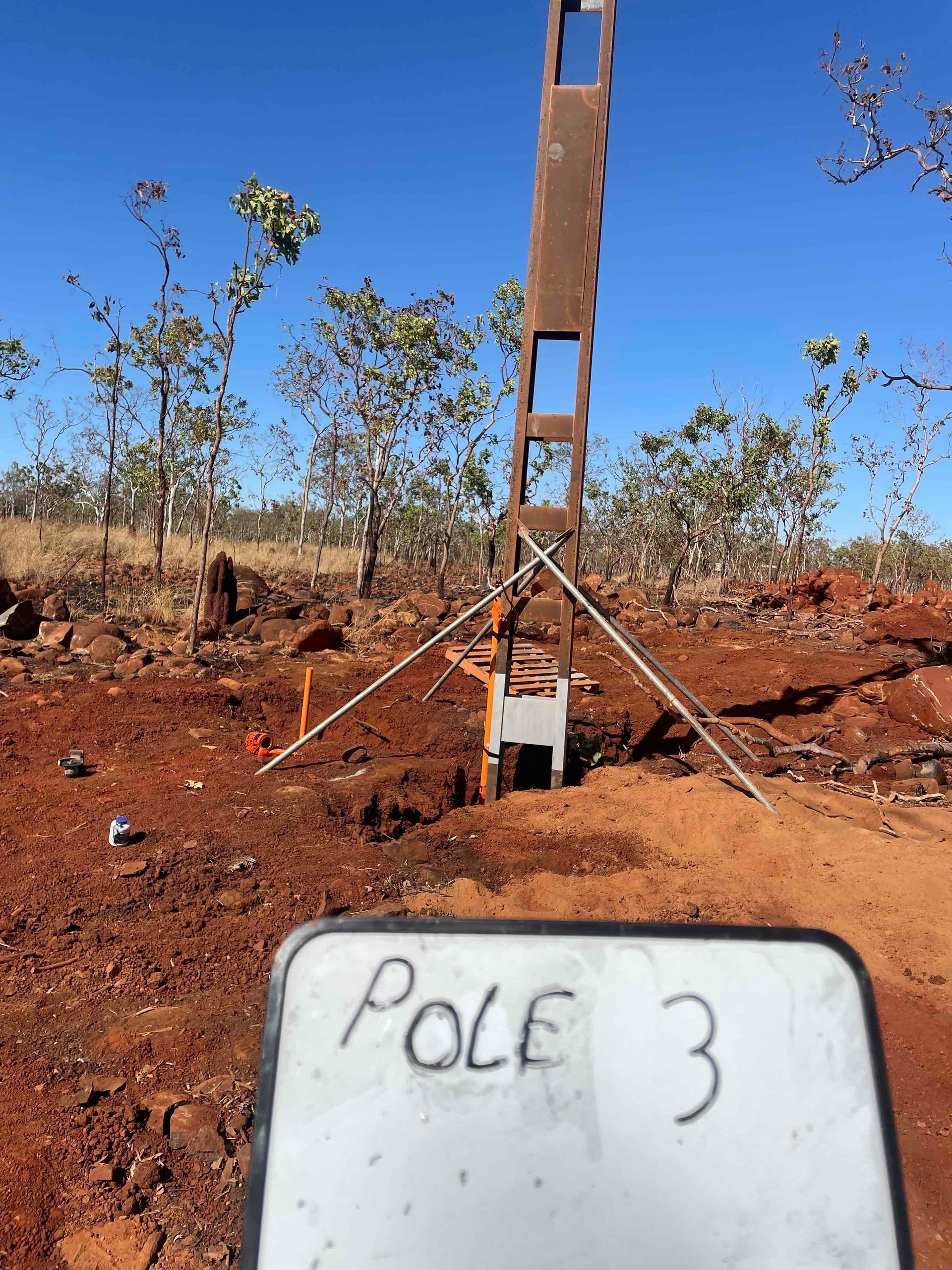
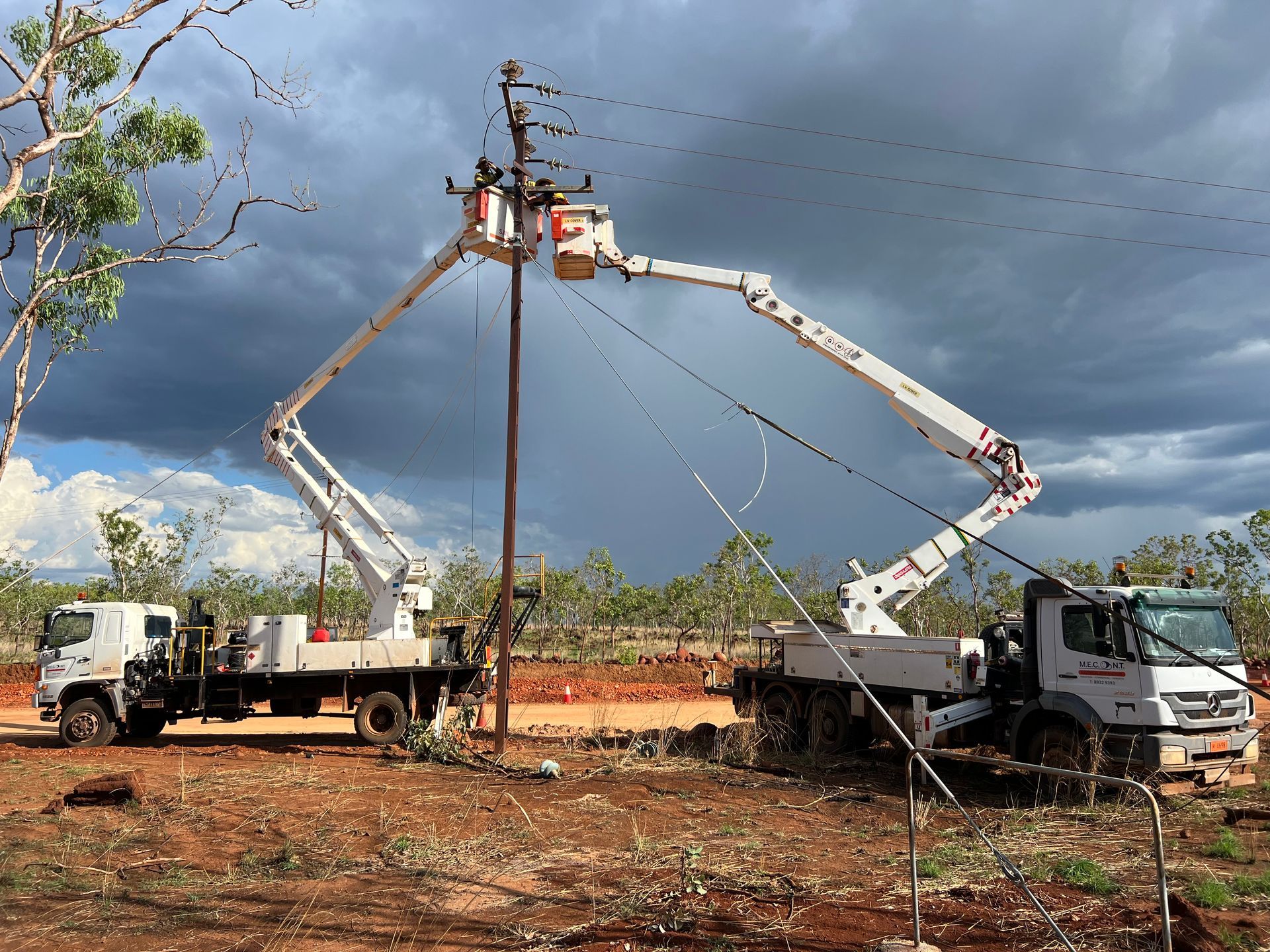
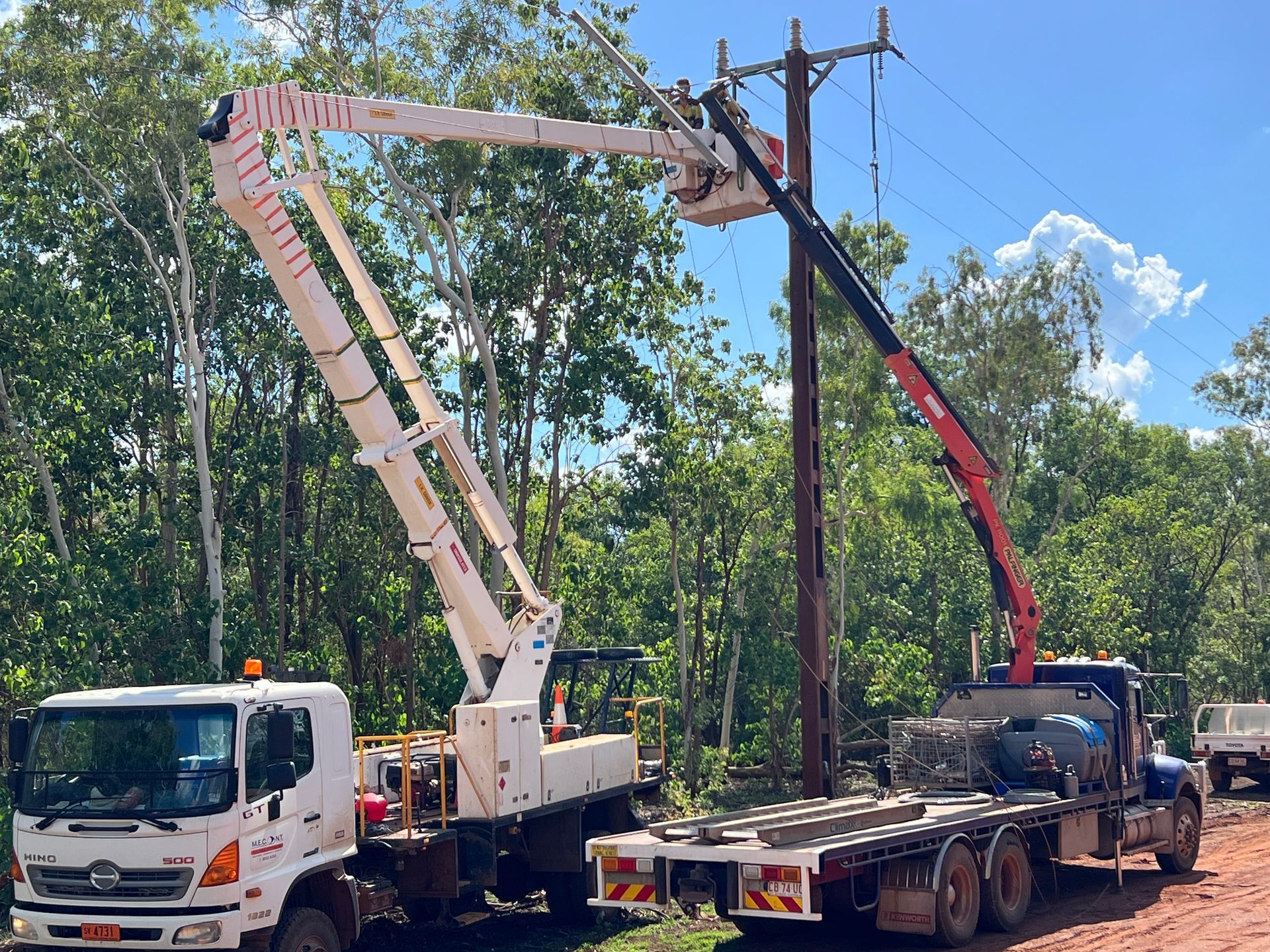
Relocation of overhead power infrastructure and limited underground crossings to support road works; new poles and stays, conductor reroutes, earthing and a 25 kVA transformer installation; permitting, traffic management and controlled HV outages.
Challenge
- Work within a remote corridor with minimal services, coordinating traffic control and permits across NTG road reserve.
- Synchronise HV feeder shutdowns with PWC system control while managing delayed long‑lead items (transformer, conductor).
- Maintain public and worker safety during pole works, conductor changeovers and commissioning in hot, humid conditions.
Solution
- Program & permits: Submitted TMP and Temporary Speed Limit Authorisation; prepared Preparation & Restoration Instructions (PRI) for sequenced shutdowns.
- Civil & electrical works: Grubbing/clearing, boring and concreting of pole footings and stays; dressing poles, rerouting AAAC conductor segments, installing a 25 kVA transformer and LV equipment, and completing earthing.
- Underground interfaces: Installed HV and communications conduits per design where required to facilitate crossings.
- Quality & commissioning: Followed HV/LV switching procedures, work practice standards and SWMS; coordinated walk‑downs and commissioning records.
Results
- Successful relocation of overhead assets supporting Central Arnhem Road upgrades, with compliant installations and documented shutdowns.
- Improved network clearance and resilience along a critical regional route.
- Full traffic management and permitting trail supporting safety and stakeholder communication.